
Injured on someone else’s property? Your rights after a slip, a fall, or a faulty product
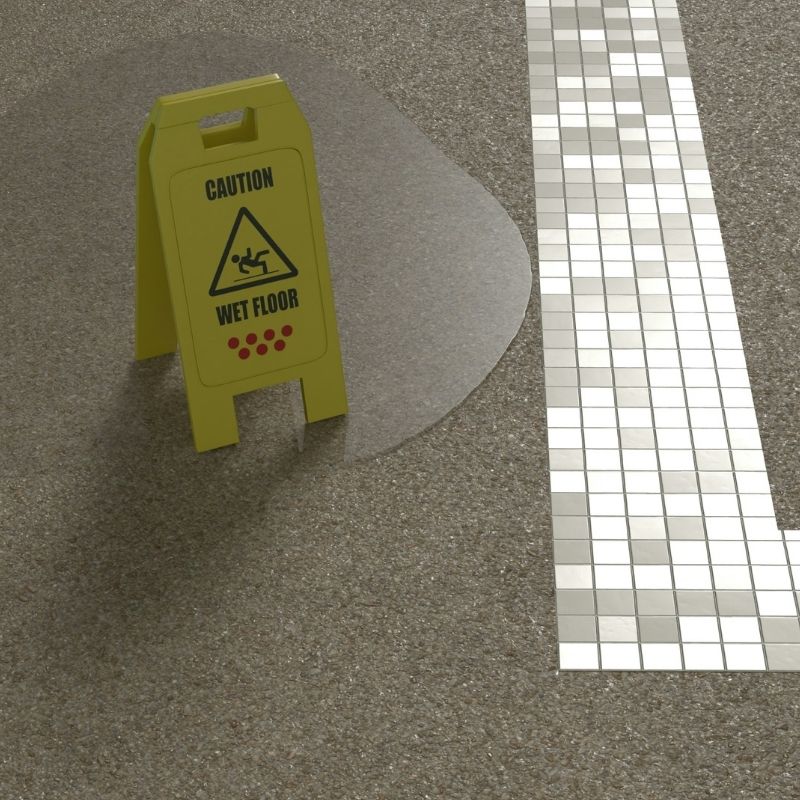
You slip on an unmarked wet floor in a supermarket. You trip on broken paving outside a shop. A product you bought fails and injures you. In each case the same question arises: was this just bad luck, or does someone owe you compensation? Often, someone does. Here is how these claims work, and why the disclaimer sign at the entrance does not settle the matter.
The basic principle: a duty to keep you reasonably safe
A business or property owner that invites the public onto its premises has a duty to take reasonable steps to keep those premises reasonably safe. Where it fails to do so and you are injured as a result, you may have a claim in delict, which is the area of law dealing with civil wrongs. To succeed you generally need to show four things:
- A duty of care. You were lawfully on the premises, for example as a customer.
- A breach. The owner failed to take reasonable steps against a foreseeable hazard, such as leaving a spill unmarked, or not repairing a known defect.
- Causation. That failure actually caused your injury.
- Harm. You suffered real loss: medical costs, lost income, pain and suffering.
A second route: the Consumer Protection Act
Where the injury comes from an unsafe or defective product, the Consumer Protection Act gives you an additional and often easier route. Under section 61 of that Act, the producer, importer, distributor or retailer can be held liable for harm caused by an unsafe product, a product failure or defect, or inadequate warnings, without you having to prove that anyone was negligent. This is called strict liability. You still must prove the defect and that it caused your harm, but you are relieved of the harder task of proving fault.
The two routes can overlap, and choosing the right one matters. In one reported case a shopper injured by falling equipment succeeded in a common-law claim but had her award reduced because she was found partly responsible for her own injury. Had she relied on the Consumer Protection Act instead, that reduction might not have applied, and she could have recovered in full. This is precisely the kind of strategic choice where early legal advice pays for itself.
“But there was a disclaimer sign”
Many people assume a notice disclaiming liability at the entrance ends the discussion. It does not. A disclaimer must meet legal requirements to be valid at all, and even a valid one has limits. It will not shield a business from liability for gross negligence, or where relying on it would be unfair, unjust or unreasonable. A sign at the door does not excuse a shop from fixing a known, dangerous defect in its floor, or from cleaning up a hazard it knew about. The sign is a factor, not a full stop.
One thing that can reduce your claim
South African law applies apportionment for contributory negligence. If you were partly responsible for your own injury, for example by ignoring a clearly marked hazard, your compensation can be reduced by your share of the blame. This is one reason the facts, and the route you choose, matter so much, and why it is worth having a claim assessed properly rather than assuming it is all-or-nothing.
What to do if it happens to you
- Report the incident to the manager or owner on the spot and ask for it to be recorded.
- Photograph the hazard, the scene, and your injuries, before anything is cleaned up or repaired.
- Get the names and contact details of any witnesses.
- Keep the product, its packaging, and your receipt if a product is involved.
- Seek medical attention and keep every record and receipt.
- Get advice promptly. These claims prescribe, generally within three years, and evidence disappears fast.
Sources: Common-law delictual liability: duty of care, wrongfulness, negligence, causation and harm. Section 61, Consumer Protection Act 68 of 2008 (strict product liability); section 2(10) (common-law rights preserved). Apportionment of Damages Act 34 of 1956 (contributory negligence). Illustrative cases: Pick ’n Pay Retailers (Pty) Ltd v Pillay (900/2020) [2021] ZASCA 125; Lombard v McDonald’s Wingtop (2020); Pieterse v FLM SA (Pty) Ltd (2024, Bloemfontein) on disclaimer notices. Prescription: three years under the Prescription Act 68 of 1969.
Tzvi Brivik (Author)
Director at Malcolm Lyons & Brivik Attorneys Inc.
Malcolm Lyons & Brivik handles personal injury and public liability claims, including slip-and-fall and defective-product matters. If you have been injured through someone else’s failure to keep you safe, contact us for an assessment of your rights.
Telephone:
Cape Town Office:
Telephone: +27 (0) 21 425-5570
E-mail: [email protected]
Johannesburg Office:
Telephone: +27 (0) 11 268 6697
Email: [email protected]
Contact form:
Related Posts



Think it is too late to claim for medical negligence? It may not be.
Many people who were harmed by negligent[...]

The RAF gave you a piece of paper instead of money. Here is why that is a good thing.
You won your Road Accident Fund claim.[...]

When resigning counts as being fired: constructive dismissal after the Maleka judgment
Sometimes an employee is not fired in[...]